The massive stainless steel kitchen on base hummed with the rhythm of service. Giant pots bubbled with rich beef stew, carrots and potatoes gleaming in the savory broth. Private First Class Lucas Sary held his tray, eyes distant, as the older volunteer, Mr. Harlan Marlow, ladled the steaming mixture.
“I didn’t ask for this,” Lucas muttered, more to himself than anyone.
Harlan paused, ladle hovering. “Your father did.”
Lucas looked up sharply. The older man continued serving, voice warm with memory. “Fed him the night before deployment.”
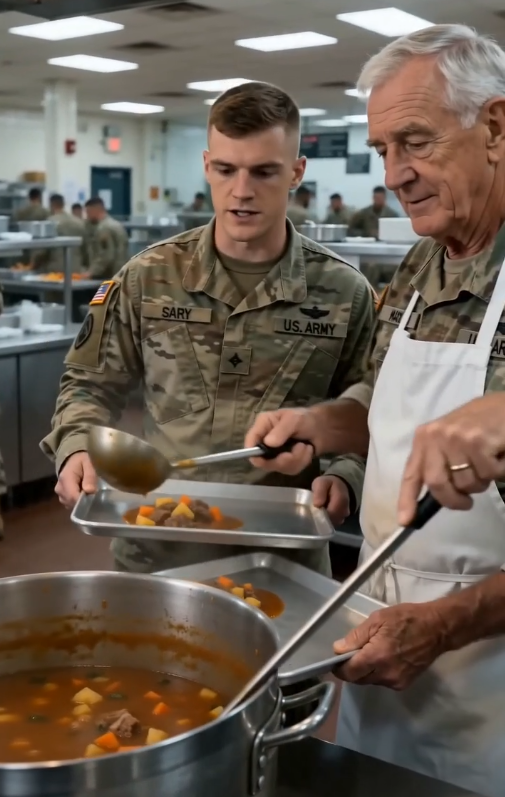
The noise of the kitchen — clanging trays, soldiers moving through the line — seemed to recede. Harlan recalled the night decades earlier when he had served Lucas’s father, then a nervous young private, a hearty meal before he shipped out. That simple act of nourishment had been a small comfort before the uncertainty of war.
Lucas stood motionless, tray in hand, as the connection sank in. The stew wasn’t just food anymore. It was a thread linking him to the father he barely remembered through the hands of a man who had been there.
Harlan placed an extra generous portion on the tray and met the young soldier’s eyes. “Eat up, son. Some traditions never fade.”
In the heart of the base kitchen, amid the steam and structure of military life, a quiet moment of legacy passed between generations — proving that even the simplest gestures can carry the weight of history and honor.